The Unique Path of Life Insurance for California’s First Responders
Honestly, if you’re a first responder in California, you’ve probably faced more than your share of tough situations. You rush into danger when others run away. Whether you’re a firefighter battling the relentless Santa Ana winds in Ventura County, a police officer patrolling the busy streets of the Inland Empire, or an EMT responding to emergencies in the sprawling Valley, your job carries inherent risks. It’s a calling, not just a career.
But here’s the thing: that very dedication, that willingness to put your life on the line, can sometimes make things like life insurance feel complicated. You might worry that your profession makes you a “high risk” in the eyes of insurers. Maybe you’ve even heard stories of colleagues getting declined or facing sky-high premiums. That feeling of uncertainty, of wondering if you can truly protect your family because of the good you do for your community, is completely understandable. It’s a frustrating position to be in.
Why Your Job Matters to Insurers — And Why It Doesn’t Have To Be a Dealbreaker
For most people, applying for life insurance is pretty straightforward. You answer some health questions, maybe take a quick medical exam, and then you get a quote. For a first responder, there’s an extra layer: your occupation. Insurers look at risk, and certain jobs, by their very nature, involve more risk.
Does this mean you’re uninsurable? Absolutely not. Does it mean you’ll automatically pay more? Not necessarily. The short answer is yes, your job is a factor. The real answer is far more nuanced, and it depends heavily on the specific insurance company and how they assess those risks. Some insurers are more friendly to first responders than others. Some specialize in it. It’s like finding the right tool for the job – you wouldn’t use a hammer to turn a screw, right? You need the right company for your unique situation.
Think about it this way: a firefighter working in a wildland urban interface zone during fire season, say near the Angeles National Forest, faces different risks than a police officer on desk duty. An EMT routinely responding to high-speed accidents on Highway 99 has different exposure than one primarily transporting non-critical patients. Insurers often look at the specifics, not just the general job title.

The Types of Life Insurance: What Works Best When You’re on the Front Lines
You’ve probably heard of term life and whole life insurance. Both have their place, but one might make more sense for you.
Term Life: Protection When You Need It Most
This is the most common and often the most affordable type of life insurance. It’s straightforward: you pick a term (like 10, 20, or 30 years) and a coverage amount. If you pass away during that term, your beneficiaries get a tax-free payout. It’s like renting protection.
For many first responders, term life is a fantastic option. It covers the years when you have a mortgage, young kids, or other significant financial responsibilities. If you’re 35, protecting your family until your kids are grown and the house is paid off makes a lot of sense. It provides a huge peace of mind for a relatively low monthly cost. And for those with demanding schedules, the simplicity of term life can be a real blessing. You set it, and you (mostly) forget it.
Whole Life: A Different Kind of Investment
Whole life insurance is permanent. It lasts your entire life, as long as you pay the premiums. It also builds cash value over time, which you can borrow against or withdraw. It’s more like owning protection.
Whole life is usually more expensive than term life for the same amount of coverage, especially in the early years. For some first responders, it can be a good long-term financial planning tool, especially if you’re looking to leave a legacy or have complex estate needs. But if your primary goal is to get the most coverage for your family for the lowest cost during your working years, term life often wins out.
Which brings up something most people miss: sometimes, a combination works best. A large term policy to cover your peak earning years and a smaller whole life policy for permanent, lifelong coverage. It’s not one-size-fits-all.
Navigating the Application Process: What to Expect
Applying for life insurance as a first responder doesn’t have to be a nightmare. Yes, there are questions about your job, your specific duties, and even your travel habits. But the key is honesty and working with someone who understands these unique circumstances.
Insurers will want to know:
* Your specific role: Are you a patrol officer, a detective, a SWAT team member? A paramedic on an ambulance, or an emergency room tech? A wildland firefighter, or a city fire engineer?
* Your typical duties: Do you regularly engage in high-risk activities? Are you frequently exposed to hazardous materials?
* Your training and safety protocols: Many insurers recognize that first responders are highly trained professionals with strict safety procedures. This can actually work in your favor.
It’s common for insurers to categorize first responders into different risk classes. Some might automatically place all firefighters in a higher risk class, while others might differentiate between administrative roles and active duty. This is where an independent agent who knows the market can make a big difference. They know which companies are more lenient and which ones are more cautious.
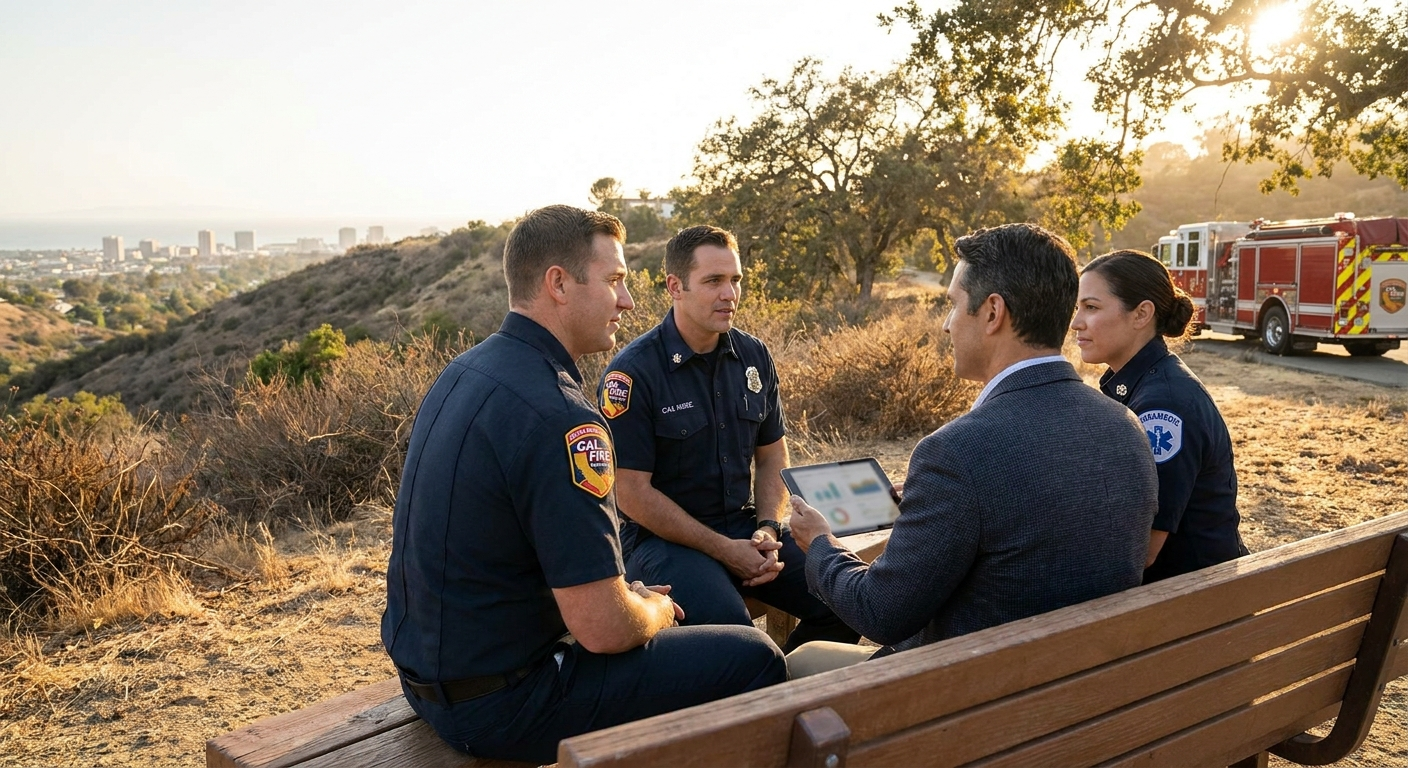
The California Factor: What Makes Your State Unique
California is a place of extremes. Earthquakes, wildfires, mudslides, urban density – these all contribute to a unique risk environment, even for civilians. For first responders, this can mean heightened exposure.
Think about the increasing frequency of major wildfires. As a firefighter in California, you’re not just fighting occasional blazes; you’re often deployed to massive, multi-county events, sometimes for weeks on end. The physical and mental toll, and the inherent risks, are immense. Or consider police officers responding to emergencies in high-crime areas of Los Angeles or Oakland.
While life insurance typically doesn’t deny coverage based on living in a high-risk natural disaster zone (it’s about *your* risk of dying, not your house falling down in an earthquake), your direct involvement in responding to these events as a first responder *is* a factor.
But wait — this doesn’t mean it’s impossible. It just means you need an agent who understands how to present your case to the right insurer. Someone who can highlight your training, your department’s safety record, and the fact that you’re a professional, not someone recklessly seeking danger.
Finding the Right Advocate: Why an Independent Agent Matters
You wouldn’t go to a general practitioner for brain surgery, right? You’d seek out a specialist. The same principle applies to life insurance for first responders.
An independent insurance agent like Karl Susman of Life Insurance Rocks (CA License #OB75129) works with many different insurance companies. They don’t represent just one. This means they can shop around for you, comparing quotes and underwriting guidelines from various carriers.
If one company views a police officer as a higher risk, another might have a specific program designed for law enforcement, offering better rates. If you were declined by one insurer, an independent agent knows which other companies might be more favorable to your specific situation. They’ve seen it all – the high-risk applications, the confusing medical histories, and yes, the concerns of first responders. Their job is to be your advocate, to cut through the confusion and find a policy that truly protects your loved ones without breaking the bank.
They understand the nuances of the application process and can help you answer questions in a way that accurately reflects your situation without raising unnecessary red flags. It’s about being honest and thorough, but also smart about how your information is presented.
It’s about protecting your family, plain and simple. You’re out there protecting everyone else. Shouldn’t someone be looking out for you?
If you’re ready to explore your options and get clear answers, you can start the process today. There’s no pressure, just information tailored to your needs.
Apply for Life Insurance with Karl Susman
What if I’ve Been Declined Before?
Don’t give up. A decline from one company isn’t a universal “no.” Different insurers have different appetites for risk. What one company considers too risky, another might be perfectly willing to cover, especially if you have a good health history otherwise. This is exactly where an independent agent shines. They know the market and can often find a home for applicants who’ve been turned away elsewhere.
Sometimes, a decline might have been due to a minor health issue that’s since been resolved, or incomplete information on an old application. It’s always worth a second look.
You deserve to have options, and your family deserves that protection. Taking a few minutes to get some real answers can make all the difference in the world.
Start Your Life Insurance Application Here
Frequently Asked Questions
Does my specific first responder role affect my life insurance rates?
Yes, it can. Insurers often differentiate between roles. A wildland firefighter, for example, might be viewed differently than a fire department administrator. Your specific duties, exposure to hazardous situations, and training all play a part.
Can I get life insurance if I’m a volunteer first responder?
Absolutely. Many volunteer first responders successfully get life insurance. The underwriting process will consider your volunteer duties in the same way they would a paid position, looking at the specifics of your role and exposure.
What if I have pre-existing health conditions in addition to my first responder job?
This can add another layer of complexity, but it’s often manageable. Insurers consider both your health and your occupation. An independent agent can help you find companies that are more lenient on certain health conditions or those that specialize in covering first responders, giving you the best chance for approval.
How much life insurance do I really need?
There’s no magic number, but a good rule of thumb is 10-15 times your annual income. You’ll also want to consider your mortgage, outstanding debts, future education costs for your children, and your spouse’s income. It’s about ensuring your family can maintain their lifestyle if you’re no longer there to provide.
Will my life insurance policy cover me if I die in the line of duty?
Most standard life insurance policies will cover death in the line of duty, just like any other cause of death. Some older or very specific policies *might* have exclusions, but it’s rare with modern policies. Always confirm this with your agent to ensure your policy provides the coverage you expect.
This article is for informational purposes only and does not constitute financial advice.